Running an ecommerce store is different from running a regular website. Your customers have specific questions that a generic chatbot cannot handle: "Where is my order?", "Does this come in size L?", "Can I return this if it doesn't fit?", and the big one. They leave items in their cart and never come back.
Cart abandonment rates hover around 70% across the industry. Order tracking questions eat up support hours. Product recommendation conversations can double your average order value if handled right. These are not problems you solve with a basic FAQ bot.
I tested 7 AI chatbots specifically for ecommerce use cases: cart recovery, order tracking, product recommendations, sizing help, and post-purchase support. Here is what actually works in 2026 for Shopify, WooCommerce, and other platforms.
TL;DR: Boei is our top pick for most ecommerce stores, offering 50+ channels including WhatsApp and AI for a flat from $11/month. Prices across the 7 tools range from from $11/month (Boei) to €79/agent/month (Freshchat), with per-ticket models like Gorgias ($0.36/ticket) adding up fast at scale. For Shopify-specific deep integration, Tidio is a strong alternative starting at €29/month, but AI costs can reach €700/month at volume.
How I evaluated these tools: I tested each chatbot on a live Shopify and WooCommerce store, measuring setup time, AI accuracy for product questions, integration depth, cart recovery capabilities, pricing transparency, and multi-channel support. My priority was finding tools that increase revenue while reducing support workload.
If you want a broader overview of AI chatbots beyond ecommerce, check out the best AI chatbots for 2026 or our AI chatbot solution page.
| Feature | Boei | Tidio | Gorgias | Re:amaze | Chatbase | LiveChat + ChatBot | Freshchat |
|---|---|---|---|---|---|---|---|
| Starting Price | from $11/mo flat | €29/mo | $0.36/ticket | $29/agent/mo | $19/mo | $20 + $52/mo | €79/agent/mo |
| Shopify Integration | Yes | Deep native | Deep native | Yes | Manual | Yes | Yes |
| WooCommerce Support | Yes | Yes | No | Yes | Manual | Yes | Yes |
| AI Included | 2,000 messages | 50 (Lyro) | AI add-on | Basic | 40 messages | 1,000 chats | Add-on |
| Cart Recovery | Via WhatsApp/SMS | Built-in flows | Via automation | Via workflows | No | Via ChatBot | Via Freshmarketer |
| Product Recommendations | AI-trained | Lyro AI | Macro-based | FAQ-based | AI-trained | Template-based | Limited |
| Multi-Channel | 50+ channels | Limited | Email + social | 5 channels | Website only | Website + FB | 5 channels |
| Live Chat Escalation | Yes, with context | Yes | Yes | Yes | No | Yes | Yes |
Bottom line: For most ecommerce stores, Boei offers the best value with flat pricing and 50+ channels. For Shopify-heavy stores needing deep product integrations, Tidio's Lyro AI is strong. For large Shopify operations with dedicated support teams, Gorgias handles volume well but costs add up.
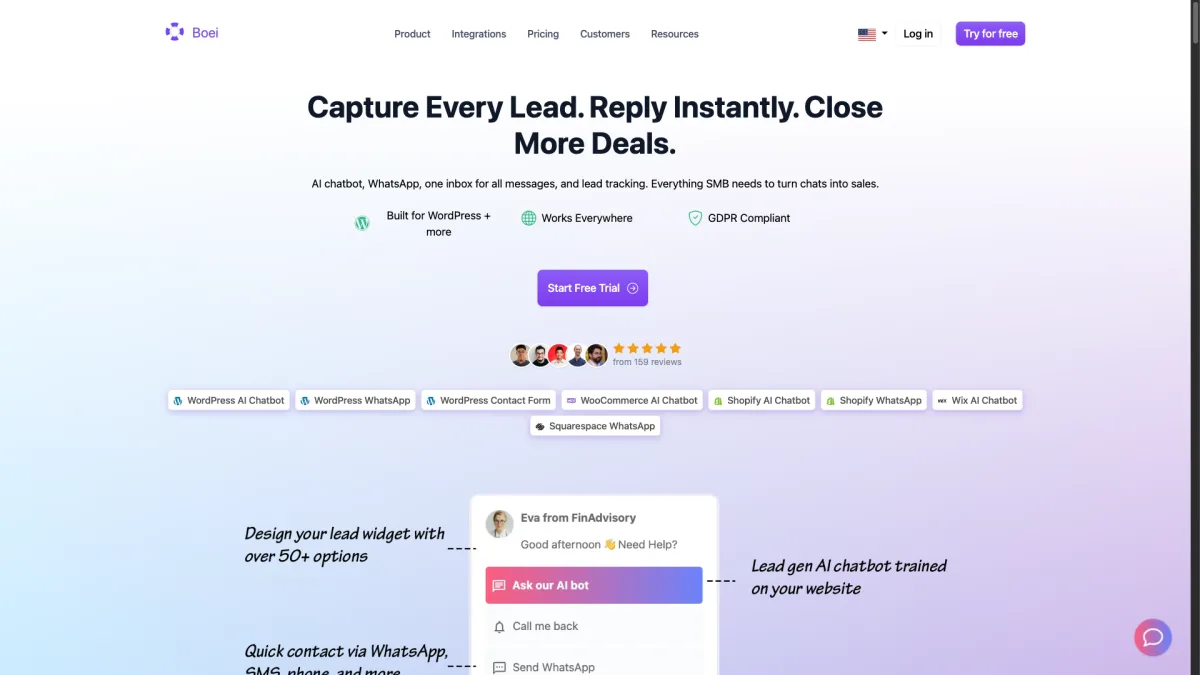
Best for: Stores that sell across multiple platforms and want customers to reach them on any channel
Most ecommerce chatbots only cover the website, while customers are messaging on WhatsApp, Instagram DM, Facebook Messenger, and email. Conversations that go unanswered for hours. Boei solves this by unifying 50+ channels in one widget.
Boei works on Shopify, WooCommerce, and any other ecommerce platform. The AI trains on your entire product catalog by crawling up to 1,000 pages. It can answer questions about sizing, materials, availability, and shipping without you manually inputting every product detail.
What makes Boei work for ecommerce:
Ecommerce-specific strengths:
The real advantage for ecommerce is the channel coverage. When a customer asks about sizing on Instagram DM at 11 PM, the AI handles it instantly. When someone wants to check stock on WhatsApp before reordering, they get an answer in seconds. Cart recovery messages via WhatsApp consistently outperform email because people actually read their WhatsApp messages.
Pricing: from $11/month flat. That includes 2,000 AI messages, 50+ channels, unlimited team seats, and the full widget. No per-ticket pricing that punishes you for growing. Compare pricing in detail or see our chatbot pricing comparison.
Limitations: No native Shopify order lookup (customers need to use their order confirmation link). The AI is trained on your website content, so your product pages need to be well-written for the best results.
Best for: Small to mid-sized ecommerce stores selling on multiple channels who want one tool instead of five.
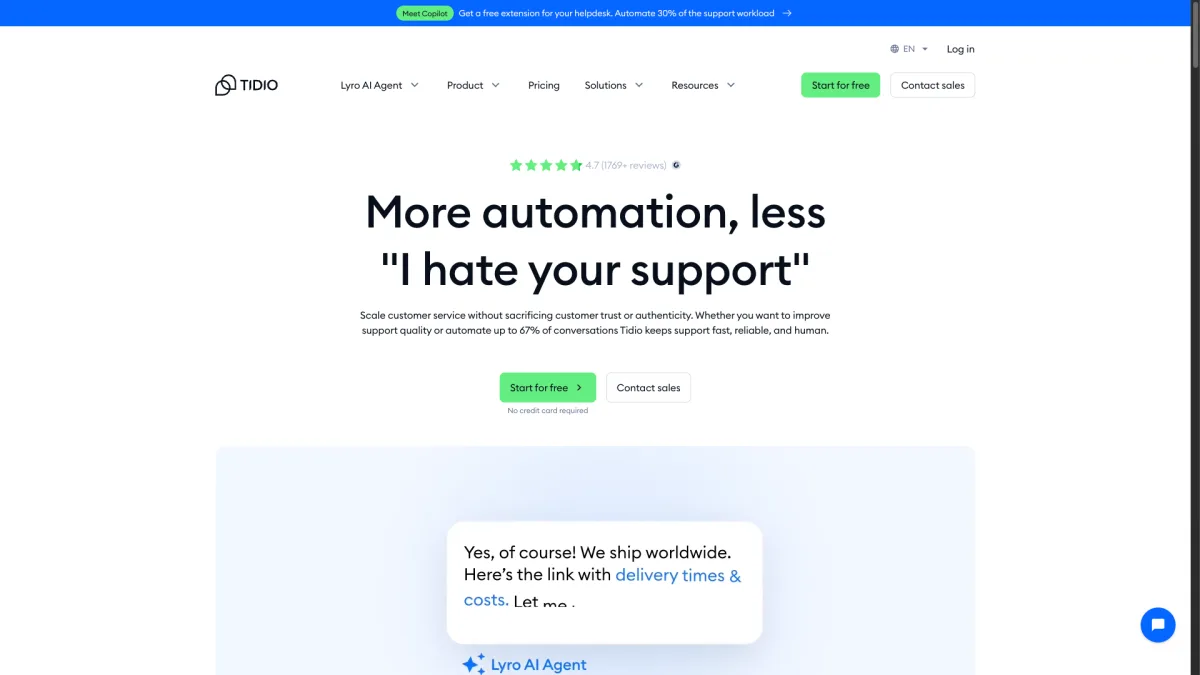
Best for: Shopify stores that want deep product-level AI and visual chatbot flows
Tidio has carved out a strong position in the Shopify ecosystem. Their Lyro AI is trained specifically for ecommerce conversations and can pull product information directly from your Shopify catalog. The visual flow builder lets you create cart abandonment sequences, product recommendation paths, and order status flows without writing code.
Ecommerce-specific strengths:
Where Tidio falls short:
The Lyro AI starts at just 50 conversations per month on the base plan. Scaling to 1,000 Lyro conversations costs around €700/month, which is steep for stores handling serious volume. The base chatbot without Lyro uses rule-based flows that feel dated.
WooCommerce support exists but is not as deep as the Shopify integration. Multi-channel coverage is limited compared to dedicated omnichannel tools.
Pricing: Starts at €29/month for the Communicator plan with 50 Lyro conversations. The AI Chatbot add-on ranges from €39-€799/month depending on volume. Free tier available with very limited features.
Best for: Shopify stores that want the tightest possible product catalog integration and are willing to pay for AI volume.
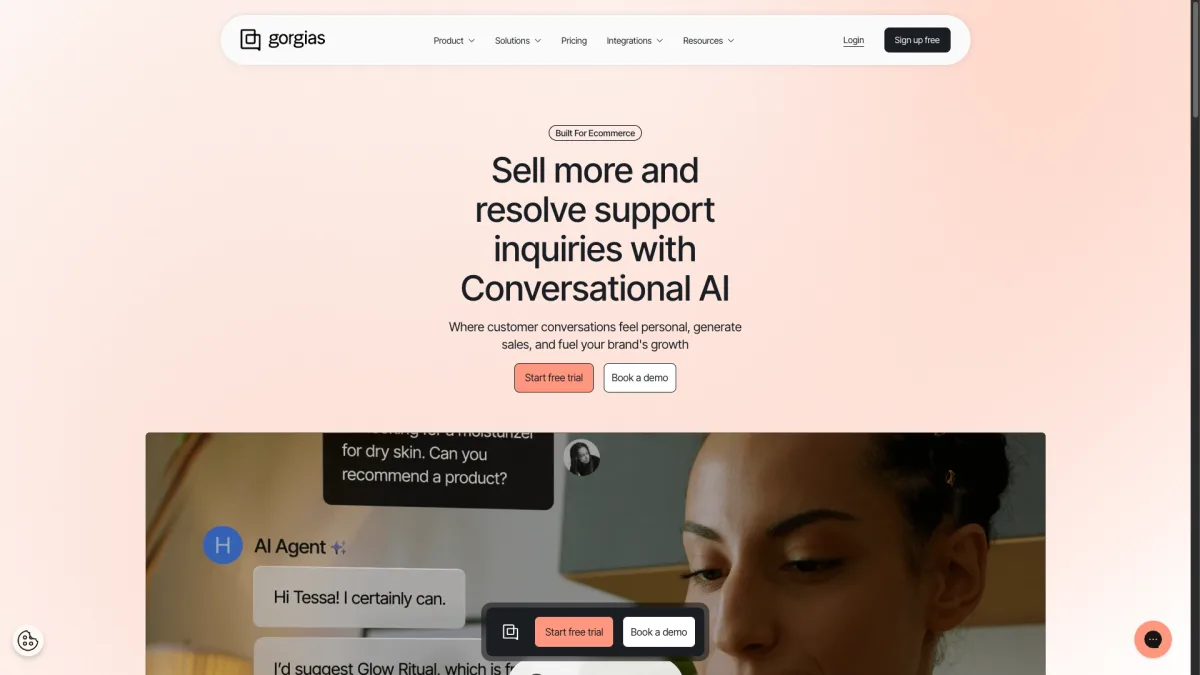
Best for: High-volume Shopify stores with dedicated support teams processing hundreds of tickets daily
Gorgias is not really a chatbot in the traditional sense. It is a full helpdesk built around Shopify. Where it excels is pulling order data, processing returns, editing orders, and managing refunds directly from within the support interface. Their AI automate feature handles repetitive questions so agents can focus on complex issues.
Ecommerce-specific strengths:
Where Gorgias falls short:
The per-ticket pricing model is the biggest drawback. At $0.36-0.40 per automated ticket, costs escalate quickly for high-volume stores. A store handling 2,000 automated tickets per month pays $720-800 just for AI automation on top of the base plan.
Gorgias is Shopify-only for deep integration. WooCommerce and other platforms get a much weaker experience. There is no standalone chatbot widget. It is designed as a helpdesk with chat features, not a chatbot with helpdesk features.
Pricing: Starts at $50/month for 300 tickets. Automate (AI) add-on charges $0.36 per automated interaction. Enterprise pricing goes higher with per-ticket costs of $0.40.
Best for: Shopify stores doing $1M+ in revenue with a support team of 3+ agents who need deep order management capabilities. Not ideal for small stores watching their budget.
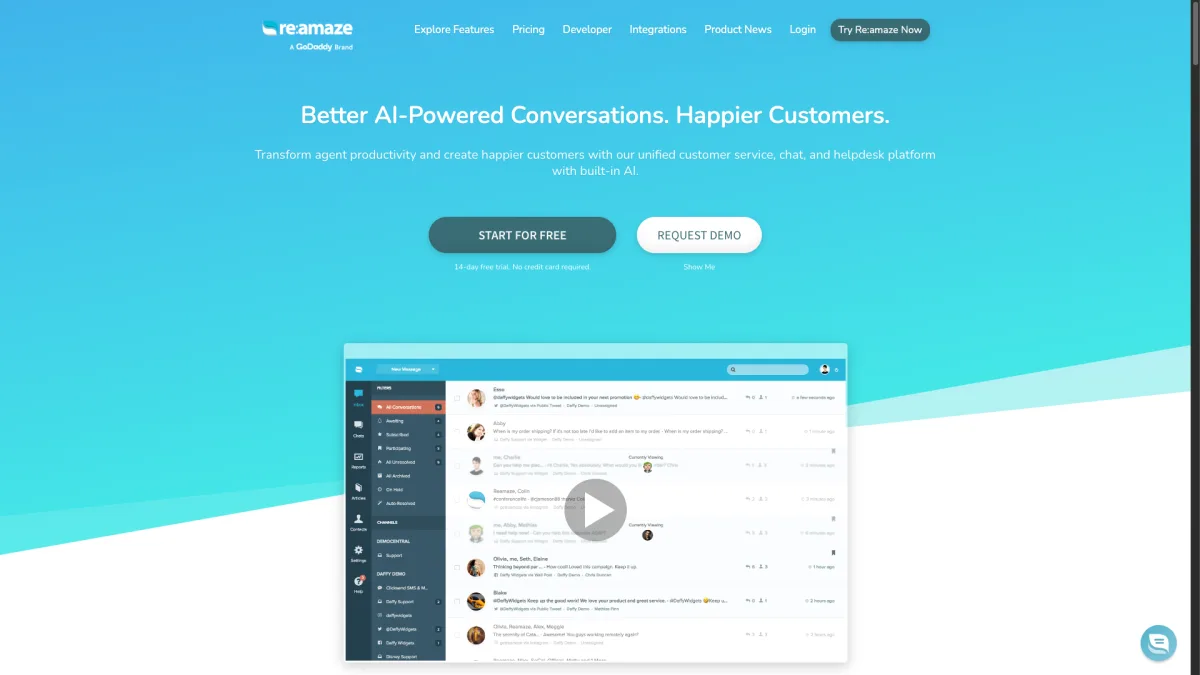
Best for: Businesses running multiple storefronts that need unified customer support with integrated FAQ
Re:amaze combines live chat, chatbot, FAQ, and help center into one platform. For ecommerce businesses operating multiple brands or storefronts, the multi-brand support is a standout feature. Manage all your stores from one dashboard with brand-specific responses.
Ecommerce-specific strengths:
Where Re:amaze falls short:
The AI capabilities feel a generation behind dedicated AI chatbots. Responses are more FAQ-matching than genuine conversational AI. The per-agent pricing means costs scale linearly with your team size, which hurts growing businesses.
The interface is functional but not modern. Setup takes longer than simpler tools, and the learning curve is steeper for non-technical users.
Pricing: $29/agent/month for the Basic plan. $49/agent/month for Pro with advanced features. A 5-agent team costs $145-245/month.
Best for: Multi-brand ecommerce operations that need a combined help center and chat solution and have the team to manage it.
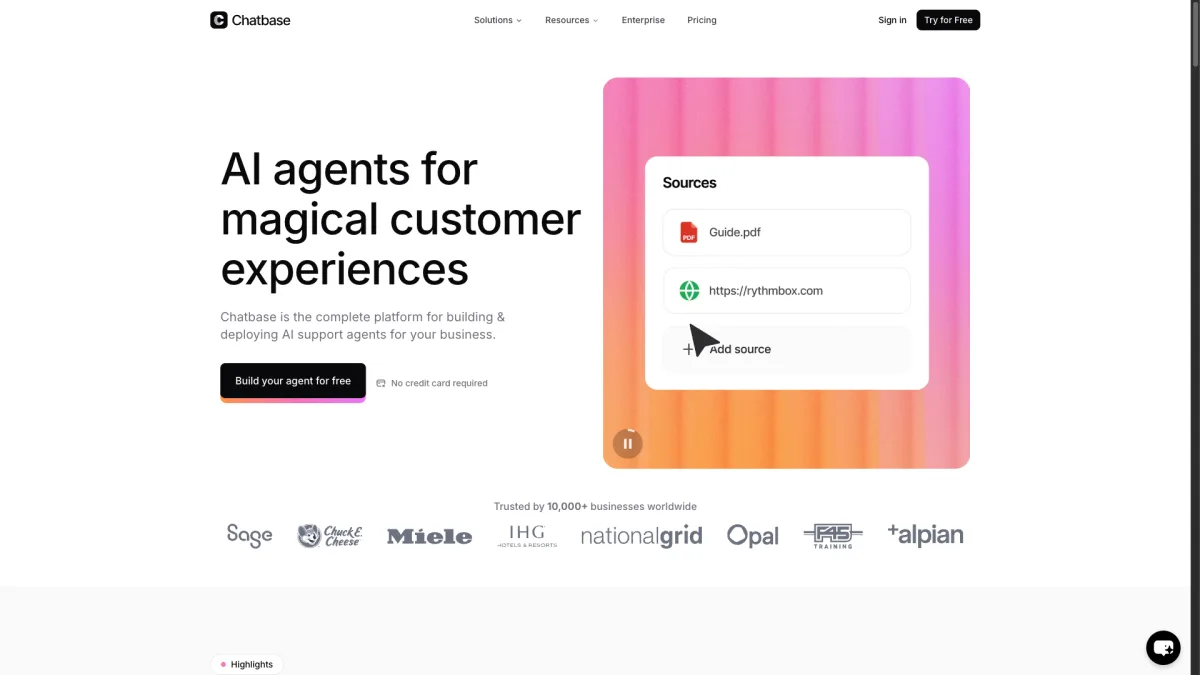
Best for: Stores that want pure AI responses trained on their product catalog without complex integrations
Chatbase takes a different approach. Instead of building ecommerce-specific features, it focuses on creating the best possible AI chatbot trained on your data. Upload your product catalog, point it at your website, feed it your return policy, and it creates an AI that answers product questions accurately.
Ecommerce-specific strengths:
Where Chatbase falls short:
No native ecommerce integrations. It cannot pull order status, check inventory, or process returns. There is no cart recovery, no proactive messaging, and no multi-channel support. It is purely a website chatbot that answers questions based on its training data.
At 40 messages per month on the free plan and limited messages on paid plans, high-traffic stores will hit limits quickly. If you want to learn more about how AI chatbot pricing by message credits works, see our message credits comparison.
Pricing: Free tier with 40 messages/month. Hobby plan at $19/month. Standard at $99/month with more messages and features.
Best for: Stores that primarily need an AI to answer product questions (materials, compatibility, specifications) and do not need order management or cart recovery.
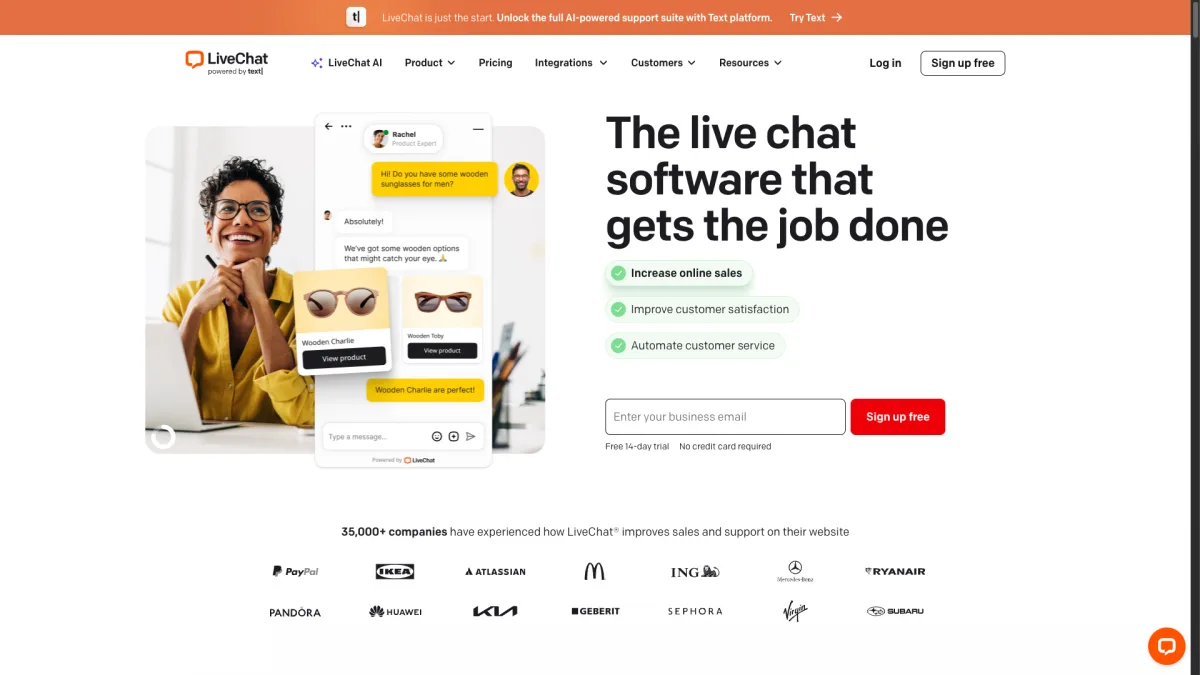
Best for: Ecommerce teams with dedicated support agents who want AI to handle overflow
LiveChat is one of the most established live chat platforms, and their companion product ChatBot.com adds AI automation. Together, they create a system where AI handles the first response and routine questions, then escalates seamlessly to human agents for complex issues.
Ecommerce-specific strengths:
Where LiveChat falls short:
You need two subscriptions: LiveChat ($20/agent/month) and ChatBot ($52/month for 1,000 chats). The combined cost adds up quickly for teams. The ChatBot AI is decent but not on the level of dedicated AI-first platforms using the latest language models.
The setup requires more configuration than simpler tools. Building effective chatbot flows takes time and testing. Multi-channel support exists but is add-on territory for most channels.
Pricing: LiveChat starts at $20/agent/month. ChatBot starts at $52/month for 1,000 chats. A 3-agent team with ChatBot pays $112/month minimum.
Best for: Ecommerce stores with 3+ support agents who want a mature, reliable live chat platform with AI augmentation rather than an AI-first approach.
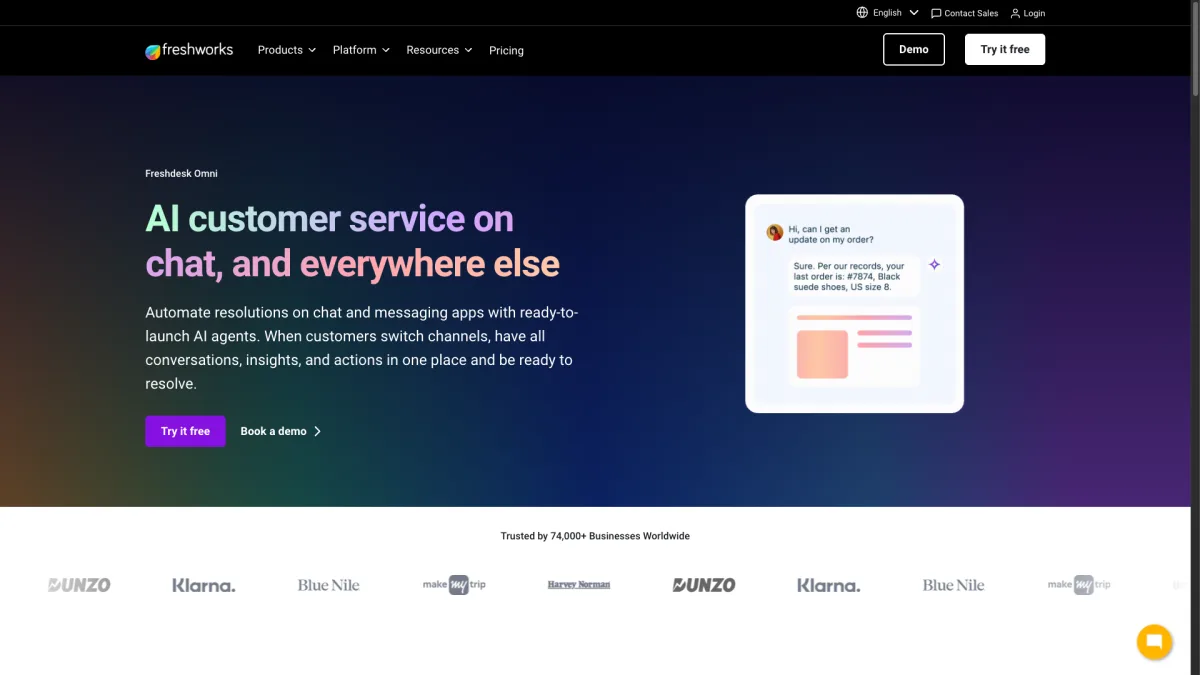
Best for: Businesses already using Freshdesk, Freshsales, or other Freshworks products
Freshchat makes the most sense when you are already in the Freshworks ecosystem. The tight integration with Freshdesk for ticketing, Freshsales for CRM, and Freshmarketer for campaigns creates a unified customer engagement platform. On its own, it is capable but expensive compared to focused alternatives.
Ecommerce-specific strengths:
Where Freshchat falls short:
The per-agent pricing at €79/month for the Enterprise plan (which includes the meaningful AI features) makes it one of the more expensive options. A 4-agent team pays €316/month before any add-ons.
The AI (Freddy) is improving but still trails behind purpose-built AI chatbots in conversational quality. WooCommerce support is limited compared to Shopify. Setup and configuration within the Freshworks ecosystem has a learning curve.
Pricing: Free tier available with limited features. Growth plan at €19/agent/month. Pro at €49/agent/month. Enterprise at €79/agent/month with full AI capabilities. See our chatbot pricing comparison for more details.
Best for: Businesses already paying for Freshdesk or Freshsales who want to add chat without introducing another vendor. Not the best standalone choice.
Not every chatbot feature matters for ecommerce. Here are the ones that directly impact revenue and customer satisfaction:
The chatbot needs to work with your ecommerce platform, not just sit on top of it. Check whether it can access product data, order information, and customer history natively. Shallow integrations that only embed a chat widget miss the point. For Shopify stores and WooCommerce stores, verify the specific integration capabilities before committing.
This is where ecommerce chatbots earn their keep. Look for:
A chatbot that can recommend products based on what visitors are browsing or asking about can significantly increase average order value. The best tools train on your full catalog and understand product relationships, alternatives, and upsell opportunities.
Your customers are not only on your website. They message you on WhatsApp, Instagram, Facebook, and email. An ecommerce chatbot that only works on your website misses 60%+ of customer conversations. Look for tools that unify all channels in one inbox with consistent AI responses across each. Check out our guide on multi-channel AI chatbot setups for more on this.
AI handles routine questions well but complex issues like damaged orders, wrong items shipped, or custom requests need human attention. The handoff should preserve full conversation context so customers do not repeat themselves. This is critical for maintaining customer satisfaction during escalation.
Per-ticket and per-conversation pricing punishes growth. A store going from 200 to 2,000 monthly conversations should not see a 10x cost increase. Flat pricing or generous included volumes protect your margins as your store scales.
Here are the specific use cases where AI chatbots deliver the highest ROI for ecommerce stores:
The highest-impact use case. A visitor adds items to their cart, starts to leave, and the chatbot triggers a conversation. Done well, this recovers 5-15% of abandoned carts. The key is timing and channel. A WhatsApp message sent 30 minutes after abandonment outperforms an email sent 24 hours later.
"Where is my order?" accounts for 30-40% of all ecommerce support inquiries. An AI chatbot that answers this instantly. Pulling tracking data and estimated delivery dates. Eliminates the most common support ticket overnight.
"I need a gift for my wife, budget around $50" or "Which laptop bag fits a 15-inch MacBook?". These conversations are sales opportunities. AI trained on your product catalog can make personalized recommendations that feel helpful rather than pushy.
A clear, AI-guided return process reduces frustration and support load. The chatbot walks customers through return eligibility, generates return labels, and offers exchanges as alternatives. All without human intervention.
For fashion and apparel stores, sizing questions are constant. "I usually wear a medium in Nike, what size should I get?" An AI trained on your size charts and fit guides reduces returns caused by sizing mistakes. Directly impacts your bottom line.
Shoppers with questions that go unanswered leave. Material composition, compatibility, warranty details, shipping times to specific regions. These are all questions that an AI chatbot handles in seconds, keeping the purchase momentum going.
Checking in after delivery to confirm satisfaction, asking for reviews, and offering complementary products. This turns a one-time buyer into a repeat customer. Automated post-purchase flows on WhatsApp or email keep the relationship alive.
For deep Shopify integration, Tidio offers the tightest native connection with product data access and order tracking. For multi-channel coverage at a lower price point, Boei works on Shopify and adds 50+ communication channels for from $11/month. For large Shopify operations with dedicated support teams, Gorgias provides the most comprehensive helpdesk features.
Yes, but the method matters. On-site popups recover some carts, but the highest recovery rates come from multi-channel follow-up via WhatsApp or SMS sent 30-60 minutes after abandonment. Tools like Boei and Tidio support cart recovery through messaging channels where open rates exceed 90%.
Ecommerce chatbot pricing ranges from from $11/month (Boei, flat rate) to $800+/month (Gorgias at high ticket volumes). Per-ticket pricing models like Gorgias cost $0.36-0.40 per automated interaction, which adds up fast for busy stores. Per-agent models like Re:amaze and Freshchat scale with team size. See our full chatbot pricing comparison for detailed breakdowns.
Email support has average response times of 12-24 hours. Ecommerce shoppers make purchasing decisions in minutes. A chatbot provides instant responses to product questions, sizing queries, and shipping inquiries at the moment they matter most. Stores that add AI chat typically see 15-30% increases in conversion rates from chat-assisted purchases.
The best ecommerce chatbots can recommend products based on your catalog data. Tools like Boei and Chatbase train on your entire product catalog and can suggest alternatives, upsells, and complementary products during conversations. The quality depends on how well your product pages describe each item.
Boei, Tidio, Re:amaze, and LiveChat work on both platforms. However, integration depth varies. Most tools have deeper Shopify integrations than WooCommerce. Boei provides equal support across both platforms since it trains on your website content rather than relying on platform-specific APIs. For WordPress and WooCommerce specifically, see our best AI chatbot WordPress plugins guide.
Setup time ranges from 5 minutes (Boei) to several hours (Gorgias, Freshchat). Simpler tools that crawl your website automatically are fastest. Platforms requiring manual product catalog imports, custom flow building, or complex integrations take longer but may offer deeper functionality. Most stores see meaningful results within the first week.
Both serve different purposes. Live chat captures visitors while they are actively shopping on your site. WhatsApp works better for post-purchase support, order updates, and reaching customers who have left your site. The best approach is combining both. Which is why multi-channel tools that include WhatsApp and live chat in one platform deliver the strongest results for ecommerce.
The right AI chatbot for your ecommerce store depends on your platform, team size, and priorities:
For most ecommerce stores under $5M in revenue, starting with a flat-rate tool that covers multiple channels makes the most financial sense. You can always add specialized tools as you scale. The worst decision is paying per-ticket from day one and watching costs balloon as your business grows.
Ready to try an AI chatbot on your store? Start a free 7-day trial with Boei. No credit card required, and setup takes less than 5 minutes on any ecommerce platform.

Article by
Ruben is the founder of Boei, with 12+ years of experience in conversion optimization. Former IT consultant at Ernst & Young and Accenture, where he helped product teams at Shell, ING, Rabobank, Aegon, NN, and AirFrance/KLM optimize their digital experiences. Now building tools to help businesses convert more website visitors into customers.
Get 30% more conversations and effortlessly convert them into customers.
Don't wait, experience it for free yourself!
URL
Trusted by 17,000+ businesses
Quick 5-min, no code setup






Easily add a WhatsApp chat button to your website with our step-by-step guide. Enhance communication and user engagement effortlessly.
AI agent vs AI chatbot: what's the real difference? Learn how agents take actions while chatbots answer questions, and which one your business needs.
How to use an AI chatbot for booking appointments. Setup guide, industry examples, and comparison with Calendly and Acuity.
AI chatbot for car dealerships captures leads after hours, books test drives, and shows inventory. See how dealerships automate sales in 2026.
Use an AI chatbot for customer onboarding to reduce churn, speed up activation, and guide new users to value faster.



 from Utrecht